
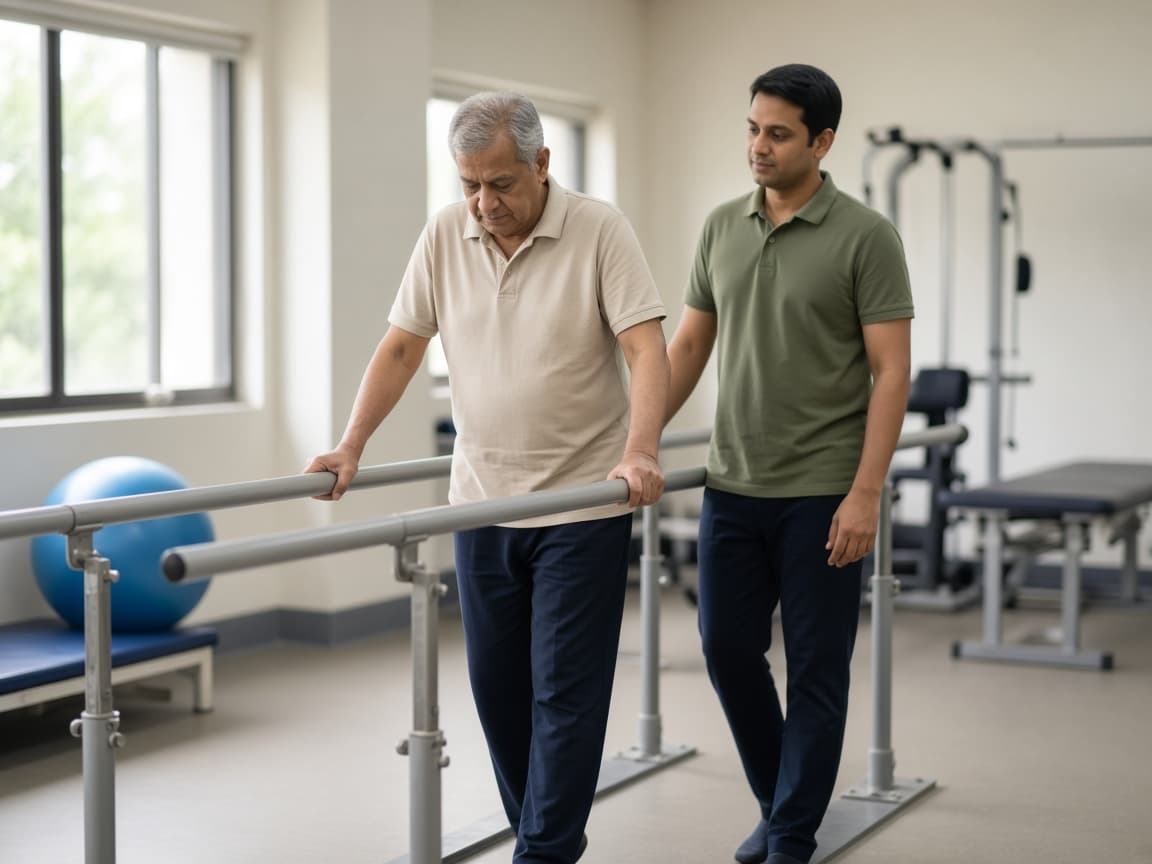
Written by Dr. Ponkhi Sharma (PT) — BPT, Rajiv Gandhi University of Health Sciences · Founder · Last reviewed
General education only, not a substitute for an assessment or treatment. Nobody here has examined you; follow it at your own risk. Full disclaimer
Quick answer: Post-surgery physiotherapy restores movement, strength and daily function after orthopaedic operations. It usually starts as soon as your surgeon allows, follows a phased plan matched to the repair, and continues until you meet clear milestones — not until a fixed number of sessions feels "enough".
An operation can repair a ligament, replace a worn joint or fix a fracture. It cannot practise walking, rebuild thigh strength or teach your brain to trust the limb again. That work is post-surgery physiotherapy, and it is where most of the recovery actually happens.
At Curis 360 we see people after knee and hip replacement, ACL and other ligament reconstructions, fracture fixation, shoulder repairs and spinal procedures referred by their surgeons. This guide explains what to expect, so the first weeks feel less uncertain.
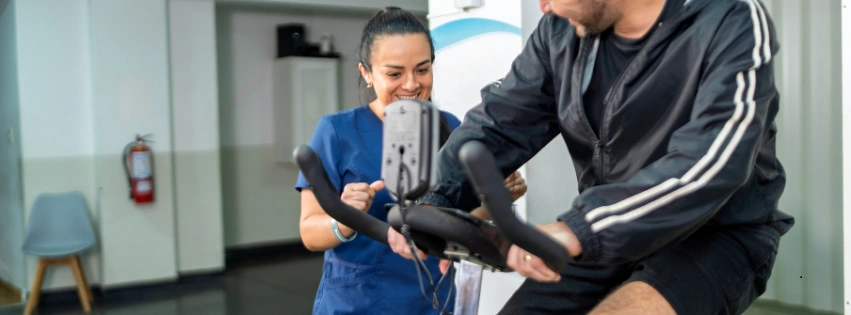
What physiotherapy does after surgery
A good post-operative plan has four jobs:
- Protect the repair — respect braces, weight-bearing rules and range limits your surgeon set
- Control swelling and pain — so you can move sooner and sleep better
- Restore range and strength — joint by joint, muscle by muscle
- Return you to life — stairs, work, sport or caring for family, with clear criteria, not guesswork
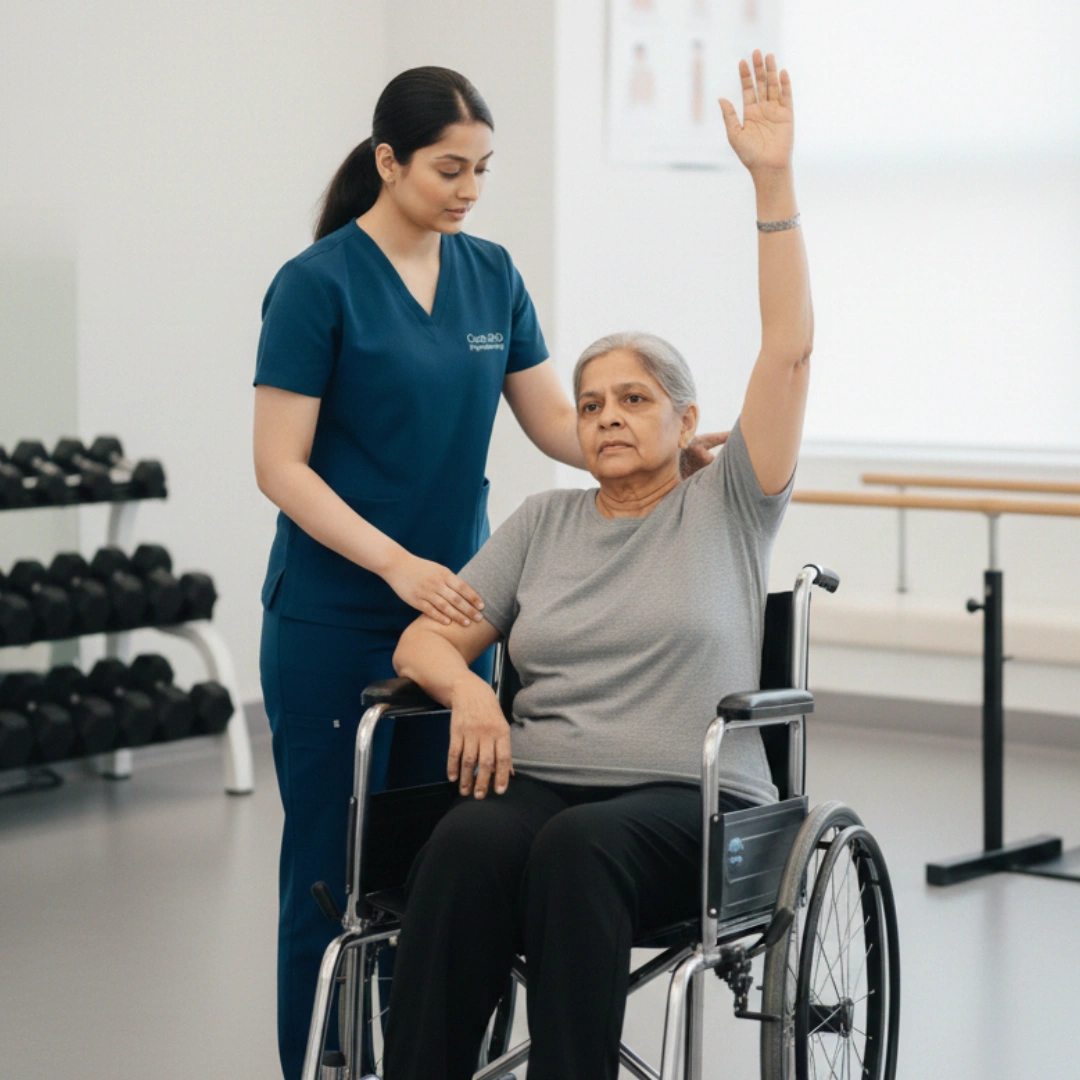
Typical timelines (examples, not promises)
Every protocol is individual. These ranges describe what many people experience when rehab goes smoothly:
| Surgery | Early physio focus | Often back to desk work | Heavier activity / sport |
|---|---|---|---|
| Knee arthroscopy (simple) | Swelling, quads switch-on, walk pattern | Days to 2 weeks | 4–8 weeks if cleared |
| ACL reconstruction | Extension, quads, gait, brace rules | 2–6 weeks (role-dependent) | 6–9+ months for cutting sports |
| Total knee replacement | Bend and straighten, walk with aid, stairs | 2–6 weeks | Months of strength work |
| Rotator cuff repair | Protected range, posture, then graded load | 2–6 weeks (desk) | Often 4–6+ months for overhead sport |
| Fracture fixation (limb) | Neighbouring joints, then progressive load | Varies with bone healing | When the surgeon clears full load |
If your timeline is slower, that is not automatically failure — swelling, other health conditions and the exact surgical findings all matter. Compare yourself to your last week, not to a stranger on social media.
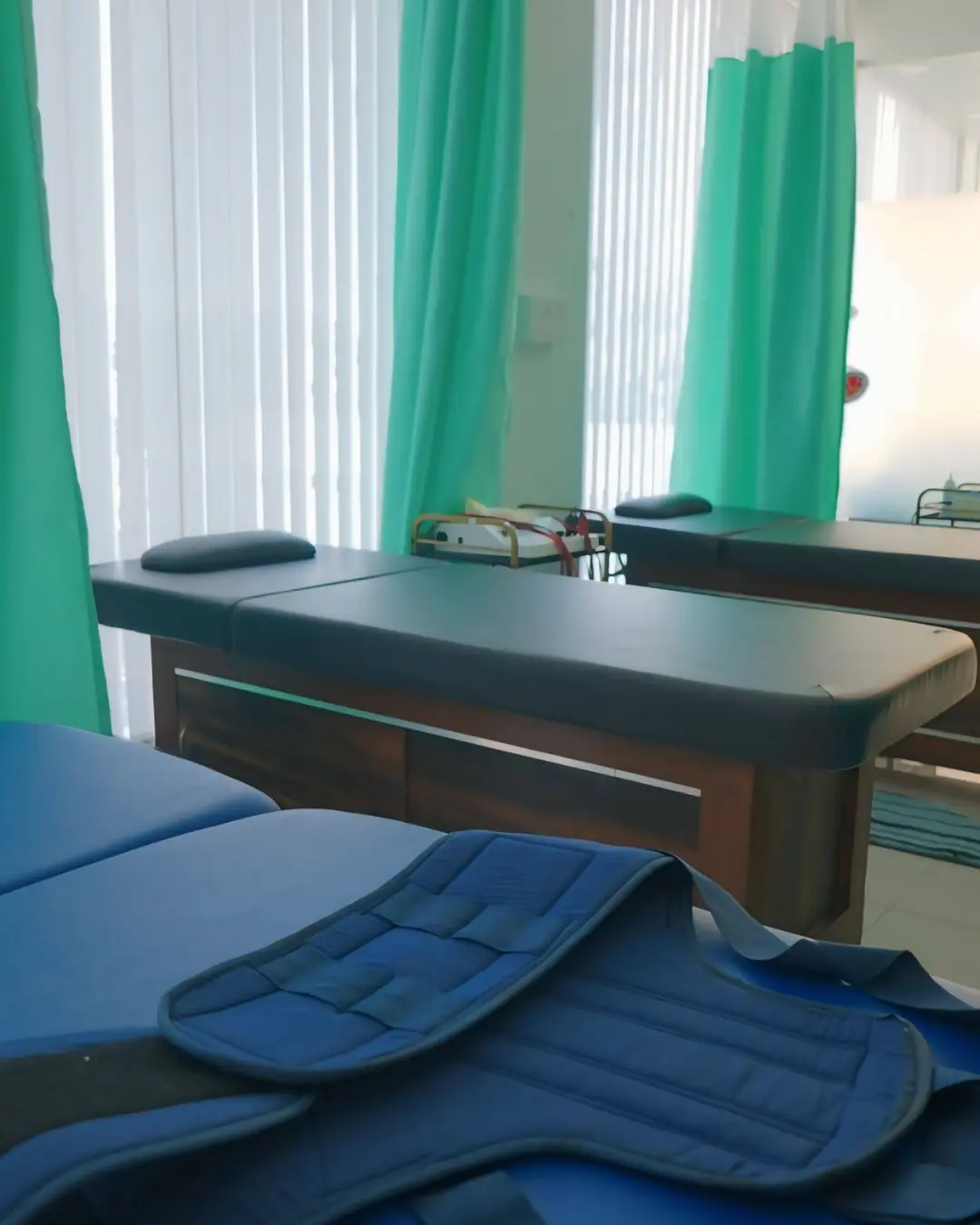
Phases of post-surgery physiotherapy
Phase 1 — Protect and wake up (days to early weeks)
- Wound and dressing care as advised by the surgical team
- Circulation exercises (ankle pumps) to lower clot risk while you are less mobile
- Gentle range within the allowed window
- Muscle setting: teaching the quadriceps, gluteal or rotator cuff muscles to fire again
- Safe transfers: bed, chair, toilet, car
Phase 2 — Restore range and basic strength
- Graded mobility work for the operated joint
- Closed-chain exercises when weight-bearing allows (sit-to-stand, step-ups)
- Balance and walking pattern correction
- Scar mobility once the wound is fully closed and your therapist agrees
Phase 3 — Build capacity
- Progressive resistance for the whole limb and trunk
- Endurance and confidence on stairs and uneven ground
- Work-specific drills (standing tolerance, lifting patterns)
Phase 4 — Return to sport or demanding work
- Hop tests, agility, overhead load or job-simulation tasks
- Clearance shared with your surgeon when the protocol requires it
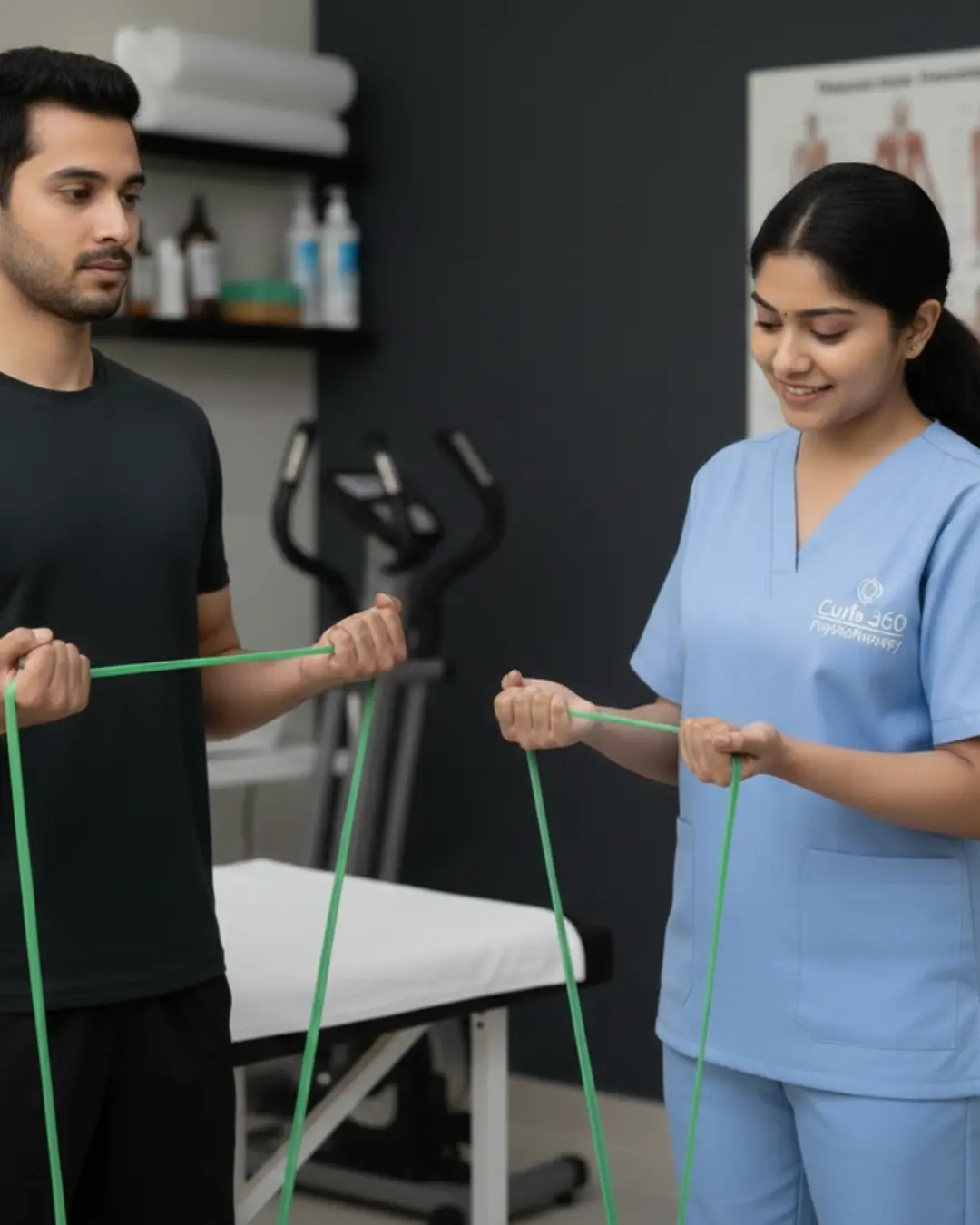
What to bring to your first session
- Discharge summary and surgeon's physiotherapy protocol
- List of medicines and any blood-thinning advice
- Brace, crutches or sling you were given
- Comfortable clothes that expose the operated area
- A clear goal: "walk without a limp", "return to badminton", "manage stairs at home"
We run a 45-minute assessment, then 45-minute treatment sessions. Home exercises between visits are not optional extras — they are most of the dosage.
Warning signs — contact your surgical team urgently
- Redness, warmth, discharge or opening of the wound, or a fever
- Calf pain or swelling, or sudden breathlessness
- A sudden increase in pain, or loss of movement or feeling, in the operated limb
These sit beside normal post-operative ache. When in doubt, call the number on your discharge sheet the same day.
Clinic care and online follow-up
Hands-on mobilisation, gait re-education and clinic equipment are available at Jayanagar, Banashankari and Vasanthapura. See our post-surgery rehabilitation service.
Once you are stable and your surgeon agrees, online physiotherapy can supervise later exercise phases if travel is hard. Clinic rates are ₹650/session on packages; ₹790 single session; online plans start from ₹900.
Frequently asked questions
When should physiotherapy start after surgery? As soon as your surgeon clears it — often within days for joint replacement and many ligament repairs. Early physiotherapy focuses on safe movement, swelling control and protecting the repair, then builds strength.
How long does post-surgery physiotherapy take? It depends on the operation. Many people need several weeks of supervised rehab after arthroscopy, three to six months after ACL reconstruction, and a structured programme over months after joint replacement. Your surgeon's protocol sets the milestones.
Is physiotherapy compulsory after orthopaedic surgery? For most ligament repairs, joint replacements and fracture fixations, structured rehabilitation is part of getting a good result. Skipping it often leaves stiffness, weakness and a higher chance of re-injury.
Can I do post-surgery rehab online? Exercise-based phases often work well by video once the wound is stable and your surgeon agrees. Early wound checks, hands-on mobilisation and clinic equipment still need in-person care when your plan calls for them.
What are the warning signs after surgery? Contact your surgical team urgently for wound redness, warmth, discharge, fever, calf pain or swelling, sudden breathlessness, or a sudden loss of movement or feeling in the operated limb.
Do I need a referral for post-surgery physiotherapy at Curis 360? Bring your discharge summary and surgeon's protocol. You can book directly; we coordinate with the milestones your surgeon has set.
Book post-surgery physiotherapy
Call +91 78998 44360, Monday to Saturday, or use the booking page. Tell us the date and type of surgery when you book so we can reserve an appropriate slot.
Get advice for your own body
Before you follow any plan or exercise, book a 1:1 online consultation with Dr. Ponkhi Sharma (PT). She reviews your problem and any reports you share, and sets out the next steps that fit you, not everyone.
Get our new guides by email

Dr. Ponkhi Sharma (PT)
Founder of Curis 360. Specializing in advanced rehabilitation, evidence-based manual therapy, and holistic patient care in Bengaluru.
View Full Clinical Profile