
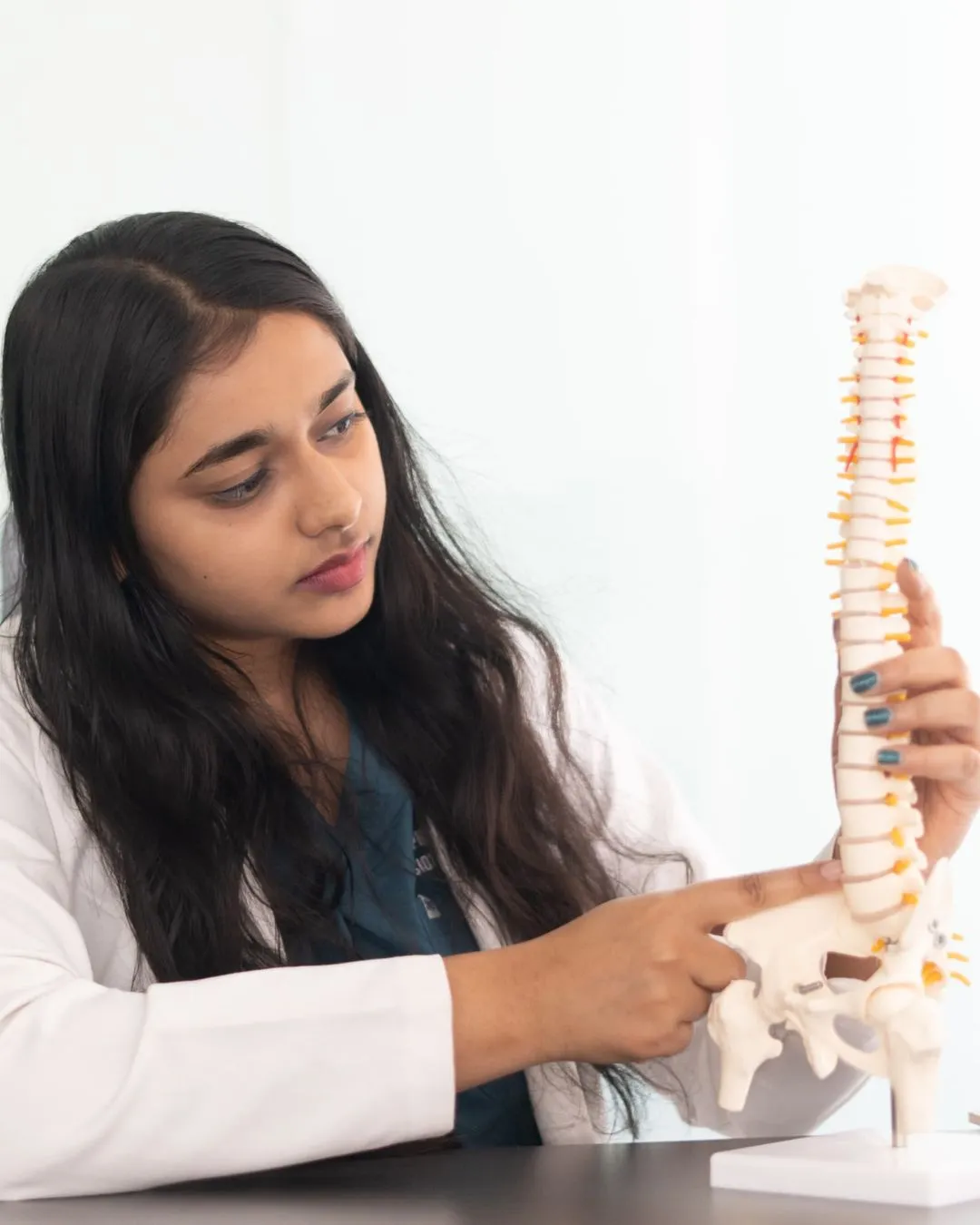
Sciatica affects an estimated 1 in 10 adults in India at some point in their lives, making it one of the most common presentations at our Curis 360 Physiotherapy clinics in Bangalore. The characteristic shooting pain that travels from the lower back through the buttock and down the leg — sometimes reaching the foot — can be extremely debilitating and frightening.
The most important fact about sciatica: approximately 90% of cases resolve completely with physiotherapy alone, without surgery. Yet many patients in Bangalore are told to rest completely, take painkillers indefinitely, or go straight to an orthopaedic surgeon. This guide explains what sciatica actually is, why physiotherapy is the first-line treatment, and exactly how our team at Curis 360 treats it.
What Is Sciatica? A Precise Clinical Definition
Sciatica is not a diagnosis in itself — it is a symptom complex describing irritation or compression of the sciatic nerve, the largest nerve in the human body. The sciatic nerve originates from nerve roots L4, L5, S1, S2, and S3 in the lumbar and sacral spine. These roots merge to form the sciatic nerve, which travels through the buttock, down the back of the thigh, and branches into the common peroneal and tibial nerves at the knee.
When any part of this pathway is compressed or irritated, pain, tingling, numbness, or weakness can occur anywhere along the distribution — from the lower back to the sole of the foot.
Classic features of sciatica:
- Unilateral (one-sided) leg pain — typically worse than back pain
- Pain follows a dermatome (a specific stripe of skin supplied by that nerve root)
- Tingling or numbness in the leg, calf, or foot
- Burning or electric-shock quality pain
- Weakness in leg or foot (in more severe cases)
- Worsened by sitting, coughing, sneezing, or straining (Valsalva manoeuvre)
- Partially relieved by walking or lying flat
What Causes Sciatica? The Most Common Triggers
Understanding the cause of sciatica is essential — because treatment differs significantly depending on the underlying mechanism.
Lumbar Disc Herniation (Slipped Disc)
By far the most common cause of true sciatica, accounting for approximately 85% of cases. The intervertebral disc — a shock-absorbing structure between lumbar vertebrae — has a tough outer ring (annulus fibrosus) and a soft inner core (nucleus pulposus).
When the outer ring tears (usually due to a combination of disc degeneration, poor posture, and a triggering load), the inner material can protrude and press directly on an adjacent nerve root. The resulting chemical inflammation is often as painful as the mechanical compression itself.
Most commonly affected levels:
- L4-L5 disc herniation → L4 or L5 nerve root → pain down the outer calf and top of foot
- L5-S1 disc herniation → S1 nerve root → pain down the back of the calf to the heel
Lumbar Stenosis
Narrowing of the spinal canal or intervertebral foramina (nerve exit holes), usually from age-related degenerative changes — bone spurs, ligamentum flavum thickening, facet joint enlargement. More common in people over 60.
Classic presentation: "neurogenic claudication" — bilateral leg pain and heaviness that worsens with walking or standing and is relieved by sitting or leaning forward (flexion opens the spinal canal).
Piriformis Syndrome
The piriformis muscle sits deep in the buttock, and in approximately 17% of people, the sciatic nerve passes directly through it (rather than beneath it). When this muscle is tight or in spasm — common in runners, cyclists, and people with leg length discrepancies — it can compress the sciatic nerve.
Piriformis syndrome is often misdiagnosed as disc-related sciatica. Key differentiating feature: pain is located in the buttock, worsens with sitting (not just standing), and there is usually no neurological deficit. MRI is typically normal.
Spondylolisthesis
One vertebra slips forward over the one below, narrowing the nerve exit and compressing the nerve root. Graded I–IV by severity. Common cause of chronic low back and leg pain in middle-aged adults and older athletes.
Sacroiliac Joint Dysfunction
The sacroiliac (SI) joint — where the pelvis meets the sacrum — can refer pain into the buttock and upper posterior thigh, mimicking sciatica. Important to differentiate because the treatment is fundamentally different.
The Physiotherapy Assessment for Sciatica
At Curis 360, our first appointment for sciatica is a detailed 45–60 minute clinical examination. This is not a 10-minute consultation — it is a comprehensive assessment designed to:
- Identify the anatomical source of nerve irritation (disc, stenosis, piriformis, SI joint)
- Determine the nerve root involved (L4, L5, or S1) through neurological testing
- Assess severity — is this acute, subacute, or chronic? Is there neurological deficit?
- Identify directional preference — does pain centralise with flexion or extension? (McKenzie method)
- Screen for red flags — cauda equina syndrome, tumour, fracture, infection (all rare but important)
Red flags that require urgent medical attention:
- Loss of bowel or bladder control (cauda equina emergency — requires immediate surgery)
- Saddle anaesthesia (numbness in the perineum/inner thighs)
- Progressive neurological deficit (rapidly worsening weakness)
- Pain that is constant, does not change with position, or wakes you from deep sleep
- Sciatica following trauma, fever, or significant unexplained weight loss
These red flags are rare, but our physiotherapists are trained to identify them and refer appropriately. Book a clinical assessment today.
How Physiotherapy Treats Sciatica
Our physiotherapy approach to sciatica is evidence-based and guided by the McKenzie MDT (Mechanical Diagnosis and Treatment) framework, combined with specific manual therapy techniques and a progressive rehabilitation programme.
1. Directional Preference Assessment and Treatment (McKenzie MDT)
The McKenzie approach is one of the most research-validated frameworks for disc-related sciatica. It identifies whether the patient's pain and neurological symptoms respond to repeated lumbar flexion or extension movements — and then prescribes the movements that cause "centralisation" (pain moving from the leg into the back, indicating decompression of the nerve).
In the majority of disc herniations, repeated lumbar extension (McKenzie Extension Protocol) causes pain to centralise from the leg to the back — a reliable indicator of disc involvement and a strong predictor of good outcomes.
2. Neural Mobilisation (Nerve Flossing)
Neural tissue mobilisation techniques — commonly called "nerve flossing" — gently mobilise the sciatic nerve along its length, reducing neural adhesions and desensitising the hypersensitive nerve.
Sciatic nerve floss technique:
- Sit in a chair with good posture
- Extend the knee to straighten the leg, simultaneously flex the foot (toes toward you)
- Hold 2 seconds, then lower the foot and slightly bend the knee
- 10–15 slow repetitions
- Do not push into pain — this should feel like a stretch in the back of the leg
Neural mobilisation is particularly effective for cases where sciatica has been present for weeks to months and the nerve has become sensitised and adherent.
3. Manual Therapy Techniques
- Joint mobilisation of the lumbar spine — Maitland Grade III–IV posterior-anterior pressures on the affected lumbar levels to restore normal segmental mobility
- Soft tissue release of the piriformis and deep hip external rotators — Essential for piriformis syndrome and many disc cases with secondary piriformis spasm
- Sacroiliac joint mobilisation — For cases with a significant SI joint component
- Traction — Manual or mechanical lumbar traction decompresses the disc and nerve root. Particularly effective for acute disc herniations with severe leg pain
4. Core Stabilisation and Lumbar Rehabilitation
Once the acute pain is controlled, progressive lumbar rehabilitation is the key to preventing recurrence. This targets the deep stabilising muscles — particularly the transversus abdominis, multifidus, and pelvic floor — that protect the lumbar discs.
Our rehabilitation programme progresses through:
- Stage 1: Deep core activation (drawing-in manoeuvre, pelvic tilts)
- Stage 2: Functional stability (dead bug, bird-dog, modified plank)
- Stage 3: Dynamic loading (bridging progressions, reverse hypers)
- Stage 4: Sports/work-specific return (if applicable)
5. Electrotherapy Modalities
- IFT (Interferential Therapy) — Delivers deep electrical stimulation to reduce nerve root inflammation and provide significant pain relief without medication
- TENS — Patient-applied pain modulation for home use between sessions
- Traction — Mechanical lumbar decompression using computerised traction tables at our Jayanagar and Banashankari clinics
The Best Exercises for Sciatica
Important: These exercises are appropriate for disc-related sciatica. Lumbar stenosis typically requires FLEXION-based exercises instead. Always get a proper diagnosis before starting.
McKenzie Extension (Press-Up)
- Lie face down, hands under shoulders
- Press your upper body up while keeping hips on the floor
- Only go as high as comfortable — do not force range
- Hold 2 seconds at top, lower slowly
- 10 repetitions every 2 hours
- This is the single most evidence-based exercise for disc-related sciatica
Prone Hip Extension (Gluteal Activation)
- Lie face down with legs straight
- Tighten the buttock of the painful side, lift the straight leg 5–10 cm off the floor
- Hold 5 seconds, lower slowly
- 3 sets × 12 repetitions
- Strengthens gluteus maximus — a key stabiliser of the lumbar spine and pelvis
Sciatic Nerve Floss (Supine)
- Lie flat, hips and knees bent to 90°
- Slowly straighten the knee of the affected leg as far as comfortable
- Simultaneously pull the foot upward (dorsiflex)
- Hold 3 seconds, lower slowly
- 10 repetitions, twice daily
- Gently mobilises the sciatic nerve, reduces neural adhesions
Bird-Dog
- Start on hands and knees, back flat, core engaged
- Simultaneously extend opposite arm and leg — right arm, left leg
- Hold 5 seconds, return to start
- Alternate sides
- 3 sets × 10 repetitions each side
- Activates lumbar multifidus and gluteus maximus simultaneously — essential for disc stability
Glute Bridge
- Lie flat, knees bent, feet flat
- Drive hips upward by squeezing glutes — do not hyperextend the back
- Hold 5 seconds at top
- 3 sets × 15 repetitions
- Strengthens glutes and hamstrings while offloading the lumbar discs
What NOT to Do With Sciatica
Several common practices can worsen sciatica:
- Complete bed rest — Widely recommended in India but strongly contra-indicated by evidence. Prolonged rest weakens core muscles, promotes disc dehydration, and sensitises the nervous system. Remain as active as your pain allows.
- Sitting on soft sofas or mattresses — Increases lumbar flexion and disc pressure. Use a firm chair with good lumbar support.
- Bending forward repetitively — For disc-related sciatica, forward bending increases disc pressure and drives disc material further onto the nerve. Use a neutral spine for all bending tasks.
- High-impact activities during acute phase — Running, jumping, heavy lifting, and sit-ups should be avoided until the acute phase resolves (typically 2–6 weeks).
- Delaying treatment — Chronic sciatica is significantly harder to treat. Early physiotherapy produces better outcomes.
Surgery for Sciatica: When Is It Actually Needed?
Most patients with sciatica do not need surgery. The evidence is clear: for disc herniations, approximately 90% of cases resolve completely within 6–12 weeks with conservative physiotherapy management.
Surgery (typically microdiscectomy) is indicated only when:
- Neurological deficit is progressing rapidly (worsening weakness)
- Cauda equina symptoms are present (immediate emergency)
- Pain is severe and completely unresponsive to 8–12 weeks of intensive, evidence-based physiotherapy
- The patient has failed two rounds of quality physiotherapy and injections
If you have been recommended surgery and have not had a proper course of physiotherapy, we strongly recommend an assessment at Curis 360 first.
Recovery Timeline for Sciatica
| Severity | Typical Recovery (with Physiotherapy) | |---|---| | Mild (leg ache, minimal neurological signs) | 4–8 weeks | | Moderate (significant leg pain, mild numbness) | 8–16 weeks | | Severe (significant weakness, severe pain) | 3–6 months | | Chronic sciatica (3+ months duration) | 3–9 months | | Post-surgical sciatica | 3–6 months |
Early presentation and consistent physiotherapy attendance are the strongest predictors of rapid recovery.
Home Physiotherapy for Sciatica in Bangalore
Many sciatica patients find it extremely painful to travel during the acute phase. Our home physiotherapy service brings expert sciatica assessment and treatment directly to your home across all zones of Bangalore — South, North, East, and West. Our home physio team carries portable traction, IFT, and TENS equipment.
Frequently Asked Questions About Sciatica Physiotherapy
How quickly will physiotherapy work for sciatica? Most patients with acute disc-related sciatica notice significant improvement within 3–4 sessions (1–2 weeks) when the correct directional approach is identified. Full resolution typically takes 6–12 weeks for acute cases.
Is physiotherapy safe for sciatica? Yes — when conducted by a qualified physiotherapist with proper assessment, physiotherapy is the safest and most effective treatment for sciatica. The key is accurate diagnosis, which our clinical team performs at every first appointment.
Can sciatica be cured permanently? Yes. For acute disc herniations and piriformis syndrome, complete resolution is the typical outcome with proper physiotherapy. For lumbar stenosis or degenerative causes, symptoms can be very well managed with physiotherapy, though ongoing exercise is needed to prevent recurrence.
What is the difference between sciatica and referred back pain? True sciatica involves the sciatic nerve and typically causes symptoms below the knee — including tingling, numbness, and/or weakness. Referred back pain is a dull, poorly localised pain in the buttock or posterior thigh without neurological symptoms. Our physiotherapists differentiate these clinically at the first appointment.
Should I get an MRI for sciatica? MRI is not necessary for the majority of acute sciatica cases. Most acute herniations resolve within 12 weeks and MRI findings rarely change the initial management. MRI is indicated when red flags are present, neurological deficit is worsening, or symptoms persist beyond 6–8 weeks of proper physiotherapy.
What is the cost of physiotherapy for sciatica in Bangalore? Initial assessment at Curis 360 costs ₹900. Follow-up treatment sessions range from ₹600–₹1,200 depending on modalities used. Book online or call +91 78998 44360.
Book Your Sciatica Assessment at Curis 360 Bangalore
The clinical team at Curis 360 Physiotherapy provides expert, evidence-based sciatica treatment at our three South Bangalore clinics:
- Curis 360 Jayanagar — 7th Block, KR Road — our main rehabilitation centre
- Curis 360 Banashankari — 3rd Stage, behind D-Mart
- Curis 360 Vasanthapura — ISRO Layout, Kanakapura Road
We also offer home physiotherapy for sciatica across all of Bangalore — ideal for patients in severe acute pain who cannot travel.
Sessions from ₹900. Open Monday–Saturday, 8 AM–8:30 PM. No referral required. Book your appointment today or call +91 78998 44360.

Dr. Ponkhi Sharma PT
Clinical Director at Curis 360. Specializing in advanced rehabilitation, evidence-based manual therapy, and holistic patient care in Bengaluru.
View Full Clinical Profile