
Written by Dr. Ponkhi Sharma (PT) — BPT, Rajiv Gandhi University of Health Sciences · Founder · Last reviewed
General education only, not a substitute for an assessment or treatment. Nobody here has examined you; follow it at your own risk. Full disclaimer
Quick answer: Stroke physiotherapy uses repeated, meaningful practice to retrain walking, balance, arm use and daily activities. It works most effectively as a partnership between the person, their family and the therapy team, with clear goals and enough practice between clinic visits.
A stroke interrupts blood flow to part of the brain. Medical care comes first. Once the person is stable, rehabilitation is how movement and independence are rebuilt. Physiotherapy is a central part of that — not as a passive machine session, but as guided practice of the skills life needs: standing, walking, reaching, turning in bed.
This guide is for families and carers navigating the weeks after discharge, written by the team at Curis 360's stroke rehabilitation service in Bengaluru.
What physiotherapy focuses on after a stroke
- Bed mobility and transfers — rolling, sitting up, moving to a chair safely
- Sitting and standing balance — the foundation for every other skill
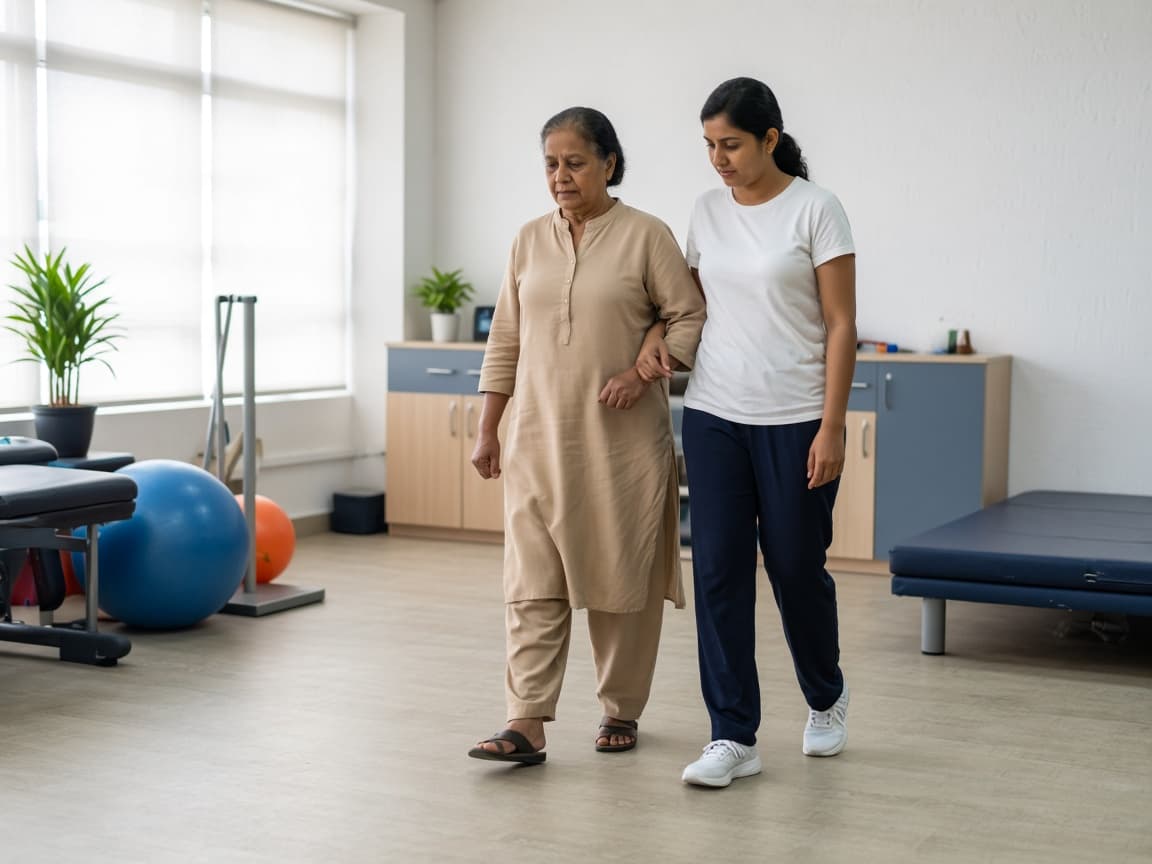
- Walking — pattern, endurance, aids (stick, walker) when they help rather than hinder
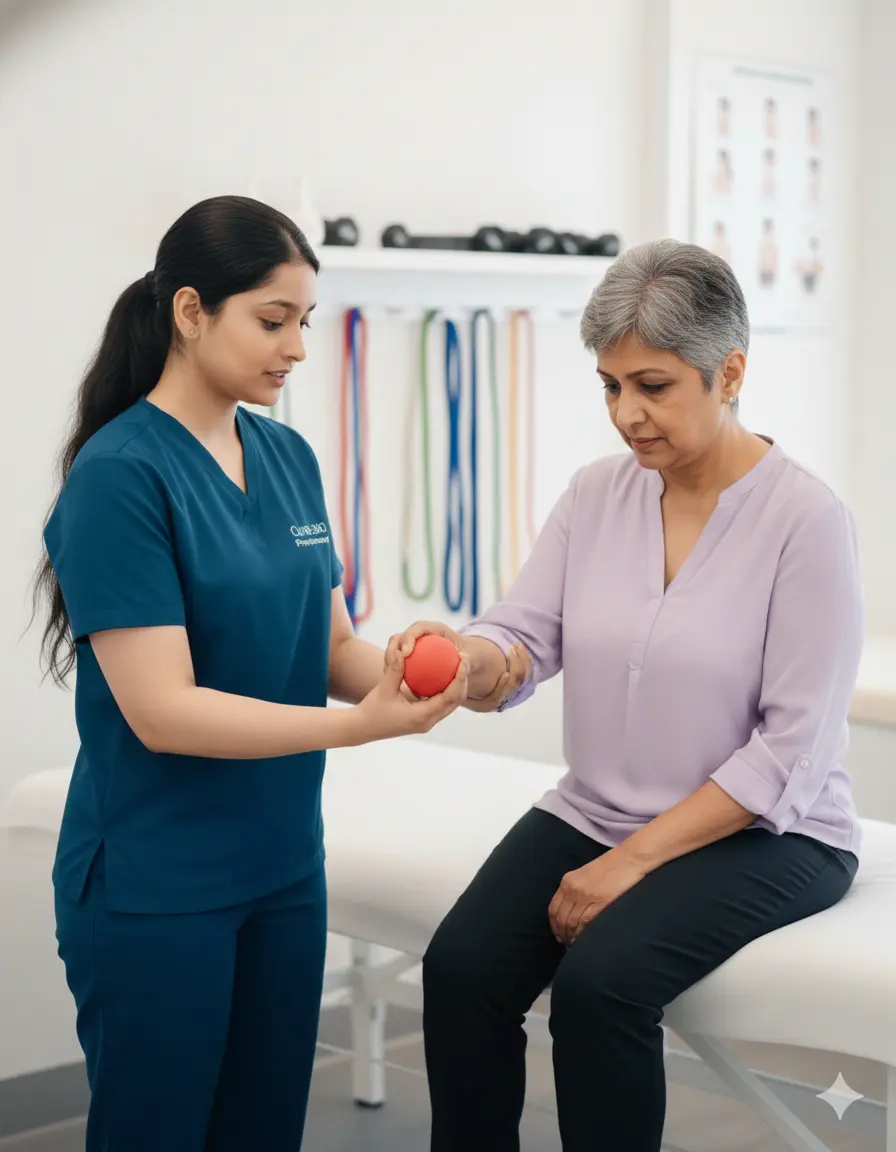
- Arm and hand — reducing learned non-use, protecting a weak shoulder, graded reach and grasp
- Tone and stiffness — stretching and positioning so muscles do not shorten into awkward postures
- Fitness and confidence — fatigue is real; plans pace effort across the week
Phases families usually recognise
Hospital and early days
The ward team starts sitting and standing when it is medically safe. The goal is preventing complications (chest infections, pressure sores, stiff joints) and capturing the brain's early plasticity with simple, frequent practice.
Coming home
Homes have steps, low toilets and busy rooms. A physiotherapist helps adapt the environment, choose an aid if needed, and set a realistic weekly dose of exercise. Doing two perfect clinic sessions and nothing in between progresses slowly; short daily practice progresses faster for most people.
Building independence
Sit-to-stand practice, step-ups, indoor walking routes, and arm tasks tied to real goals (lifting a cup, buttoning) matter more than generic "leg lifts" with no purpose.
Longer-term recovery
Improvement can continue well beyond the early months. Programmes shift toward community walking, balance challenge and preventing falls. See also our elderly care and balance work when falls risk stays high.
What a clinic session at Curis 360 looks like
- Check-in — sleep, mood, new symptoms, how home exercises went
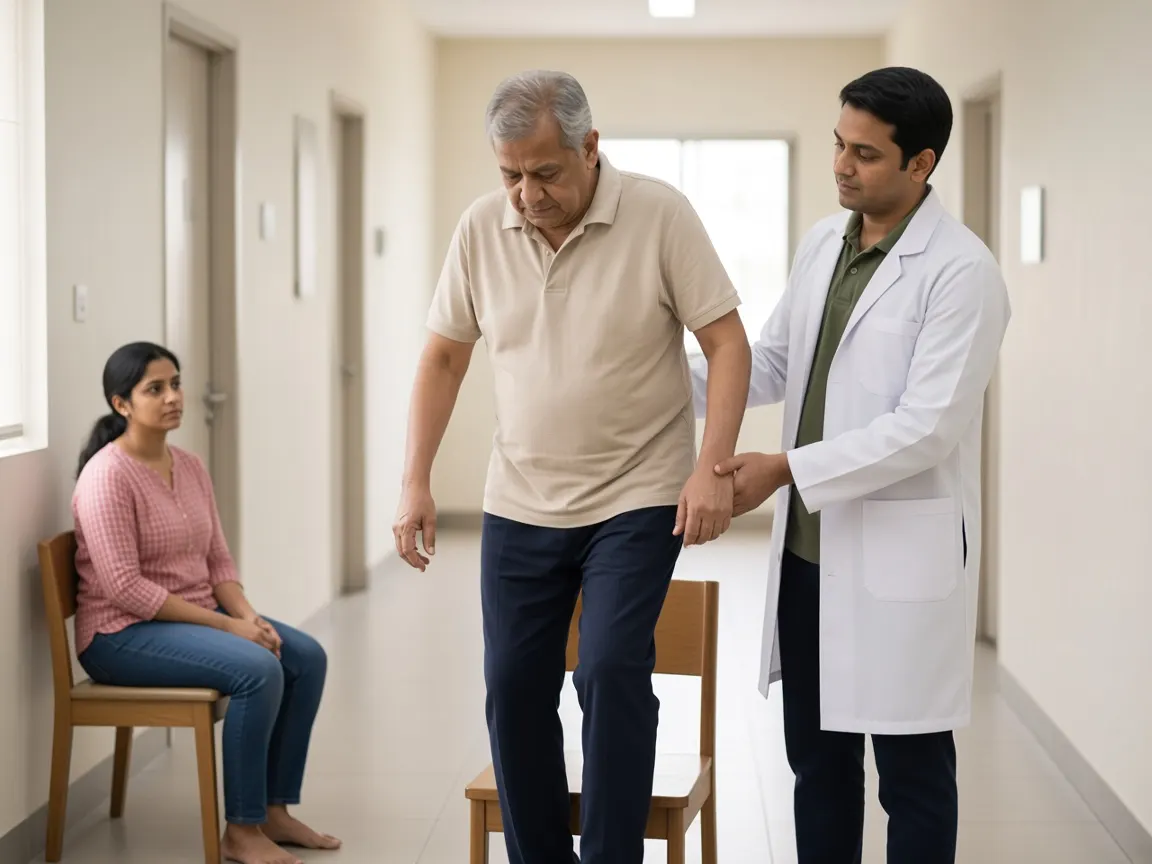
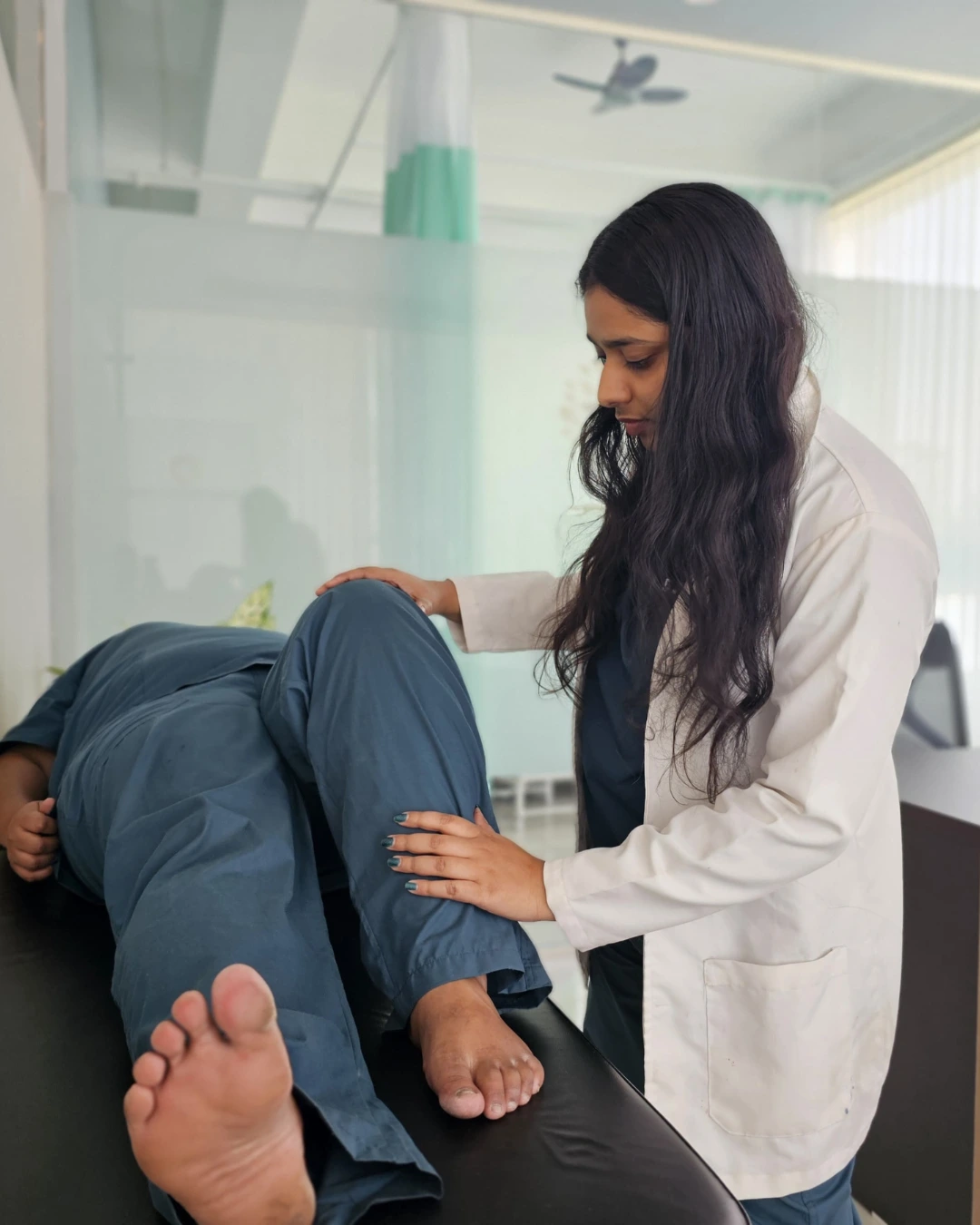
- Hands-on facilitation where it helps the person feel a better movement pattern
- Task practice — repeated sit-to-stand, stepping, reaching, or gait drills
- Education for the carer — how to assist without hurting their own back or the person's shoulder
- Updated home plan — a few exercises done well beat a long list done rarely
Sessions are 45-minute. The first visit includes a fuller 45-minute assessment.
Caregiver tips that make a difference
- Protect the weak shoulder — never pull the person up by the affected arm
- Encourage the weaker side in safe tasks (washing the face, holding a shopping bag lightly) so the brain keeps receiving practice
- Watch fatigue — quality drops when someone is exhausted; split practice into short blocks
- Footwear — stable, closed shoes beat slippers for walking practice
- Mood — frustration and low mood are common; tell the therapy team, because engagement drives practice dose
Emergency warning signs
Call emergency services for:
- Sudden face drooping, arm weakness or slurred speech
- A sudden severe headache, loss of vision or loss of balance
- Weakness or numbness that is spreading or getting worse quickly
- New loss of bladder or bowel control
A second stroke or a serious complication needs hospital care first; physiotherapy continues afterwards.
Online coaching vs clinic sessions
Online physiotherapy can coach home exercises and carer technique when the person is stable and supervised. People who need hands-on facilitation, closely guarded gait practice or clinic equipment should continue in-person care at Jayanagar, Banashankari or Vasanthapura. Clinic sessions are ₹650/session on packages; ₹790 single session; online plans start from ₹900.
Frequently asked questions
When should physiotherapy start after a stroke? As early as the medical team allows — often within days in hospital. After discharge, outpatient or clinic physiotherapy continues the plan. Earlier, task-specific practice is linked with better recovery of movement for many people.
How long does stroke physiotherapy continue? Recovery is individual. Many people make the fastest gains in the first three to six months, and meaningful improvement can continue beyond a year with regular practice. Plans are reviewed against goals, not a fixed end date.
What does a stroke physiotherapy session include? Assessment of strength, tone, balance and walking; hands-on facilitation where needed; task practice such as sit-to-stand, stepping and arm reach; and a short home programme for the family to continue.
Can stroke rehab be done online? Video sessions can coach exercise and caregiver technique when the person is medically stable and can be supervised at home. People who need hands-on facilitation or closely supervised walking practice still benefit from in-person sessions.
What are emergency warning signs after a stroke? Call emergency services for sudden face drooping, arm weakness or slurred speech; a sudden severe headache; sudden loss of vision or balance; or weakness or numbness that is spreading quickly.
How can family members help? Help with the home exercise dose your physiotherapist sets, encourage use of the weaker side in safe daily tasks, watch for fatigue and skin issues, and avoid pulling on a weak shoulder.
Book stroke rehabilitation physiotherapy
Call +91 78998 44360, Monday to Saturday, or use the booking page. Bring hospital discharge notes and any current exercise sheet so we can continue from where inpatient rehab left off.
Read more on our stroke rehabilitation and paralysis care pages.
Get advice for your own body
Before you follow any plan or exercise, book a 1:1 online consultation with Dr. Ponkhi Sharma (PT). She reviews your problem and any reports you share, and sets out the next steps that fit you, not everyone.
Get our new guides by email
Dr. Ponkhi Sharma (PT)
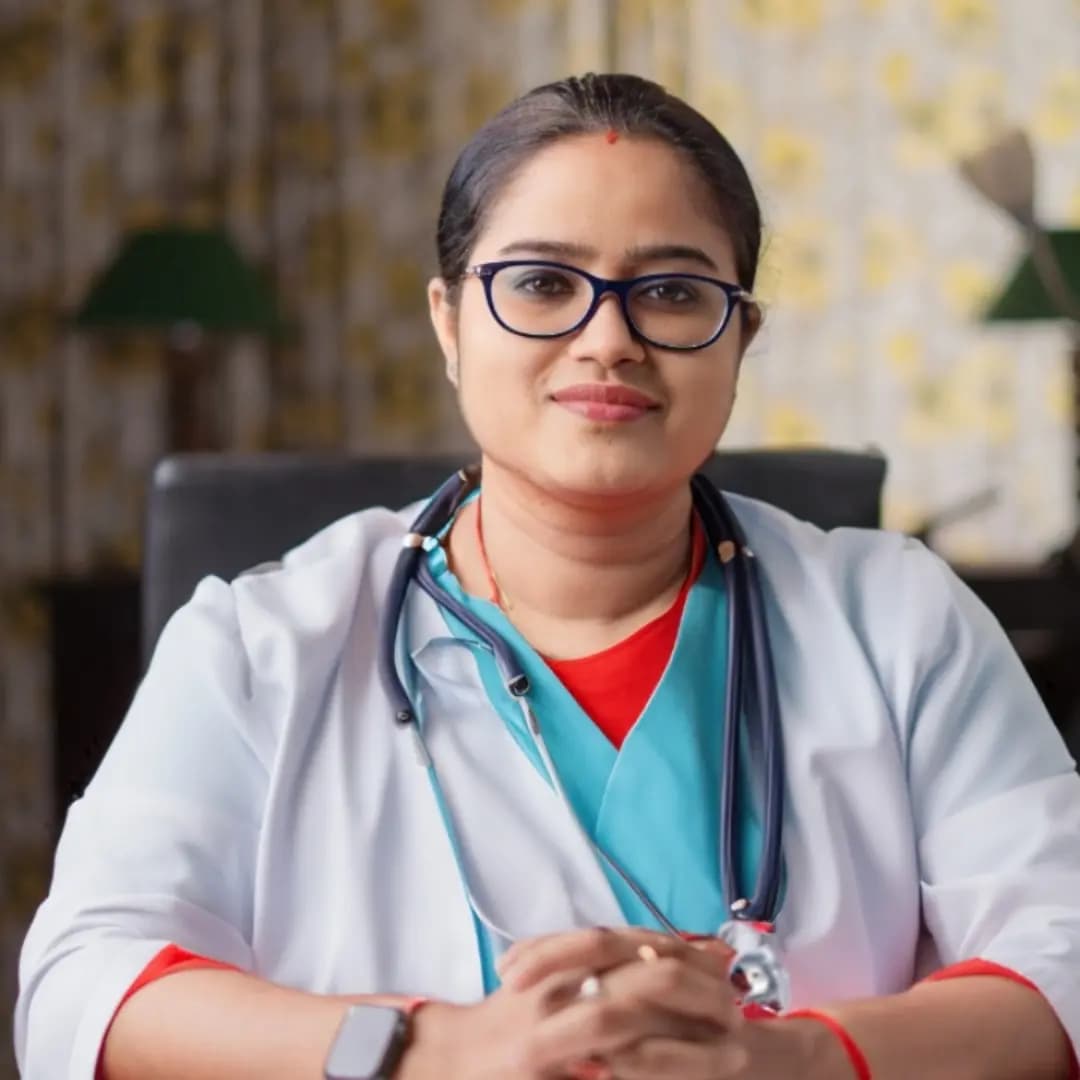
Founder of Curis 360. Specializing in advanced rehabilitation, evidence-based manual therapy, and holistic patient care in Bengaluru.
View Full Clinical Profile