
Written by Dr. Ponkhi Sharma (PT) — BPT, Rajiv Gandhi University of Health Sciences · Founder · Last reviewed
General education only, not a substitute for an assessment or treatment. Nobody here has examined you; follow it at your own risk. Full disclaimer
Quick answer: Tennis elbow is overload of the tendon on the outer elbow. It settles for most people with graded physiotherapy exercises, temporary changes to gripping and desk work, and hands-on care when pain is high — not with complete rest or repeated cortisone injections alone. Surgery is uncommon.
Outer elbow pain that flares when you lift a kettle, turn a key or type for an hour is often labelled tennis elbow. The medical name is lateral elbow tendinopathy (older term: lateral epicondylitis). Despite the name, most people we see at Curis 360 never play tennis. Desk work, DIY, cooking, gym grips and racket sports all load the same tendon.
This guide explains what is going wrong, what helps, what to avoid, and what a physiotherapy plan looks like at our Jayanagar, Banashankari and Vasanthapura clinics.
What tennis elbow actually is
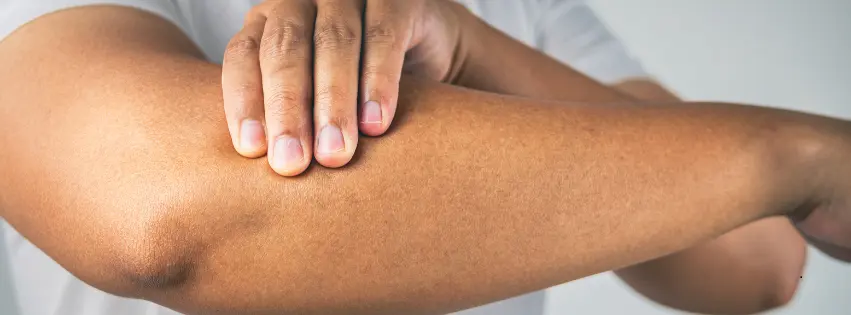
The muscles that lift the wrist and fingers share a tendon that anchors on the lateral epicondyle — the bony bump on the outer elbow. Repeated gripping and wrist-up force overload the tendon fibres. Over weeks the tendon becomes irritable and less able to tolerate load. That is tendinopathy: a capacity problem, not usually an acute tear.
Typical symptoms:
- A sharp or dull ache on the outer elbow, sometimes spreading into the forearm
- Pain when gripping, shaking hands, lifting a cup, wringing a cloth or using a mouse
- Tenderness when you press the outer bony point
- Morning stiffness that eases a little once you start moving
- Weakness of grip compared with the other side
Night pain, numbness into the hand, or pain that started after a fall need a different assessment — those are not classic tennis elbow.
Tennis elbow vs golfer's elbow
| Tennis elbow | Golfer's elbow | |
|---|---|---|
| Where it hurts | Outer elbow | Inner elbow |
| Worse with | Gripping, wrist up, mouse use | Wrist down, gripping with a flexed wrist |
| Tendon | Common wrist extensors | Common wrist flexors |
| Physiotherapy focus | Graded loading of the extensor tendon | Graded loading of the flexor tendon |
Both conditions share the same principles: reduce the spike of load, then rebuild capacity. Our tennis elbow treatment page covers clinic care in more detail.
Why it starts (and why rest alone fails)
Tendons adapt to the load they regularly see. Tennis elbow usually follows a sudden increase: a new gym programme, painting a room in a weekend, longer hours at a laptop with a tense grip, or returning to badminton after months off. Age between roughly 35 and 55 is common, because tendon collagen becomes less springy with time.
Complete rest feels sensible and often eases pain for a few days. Then the first normal week of work brings it back, because the tendon never rebuilt its capacity. Physiotherapy aims to find the sweet spot: enough load to stimulate repair, not so much that every session flares for two days.
How physiotherapy treats tennis elbow
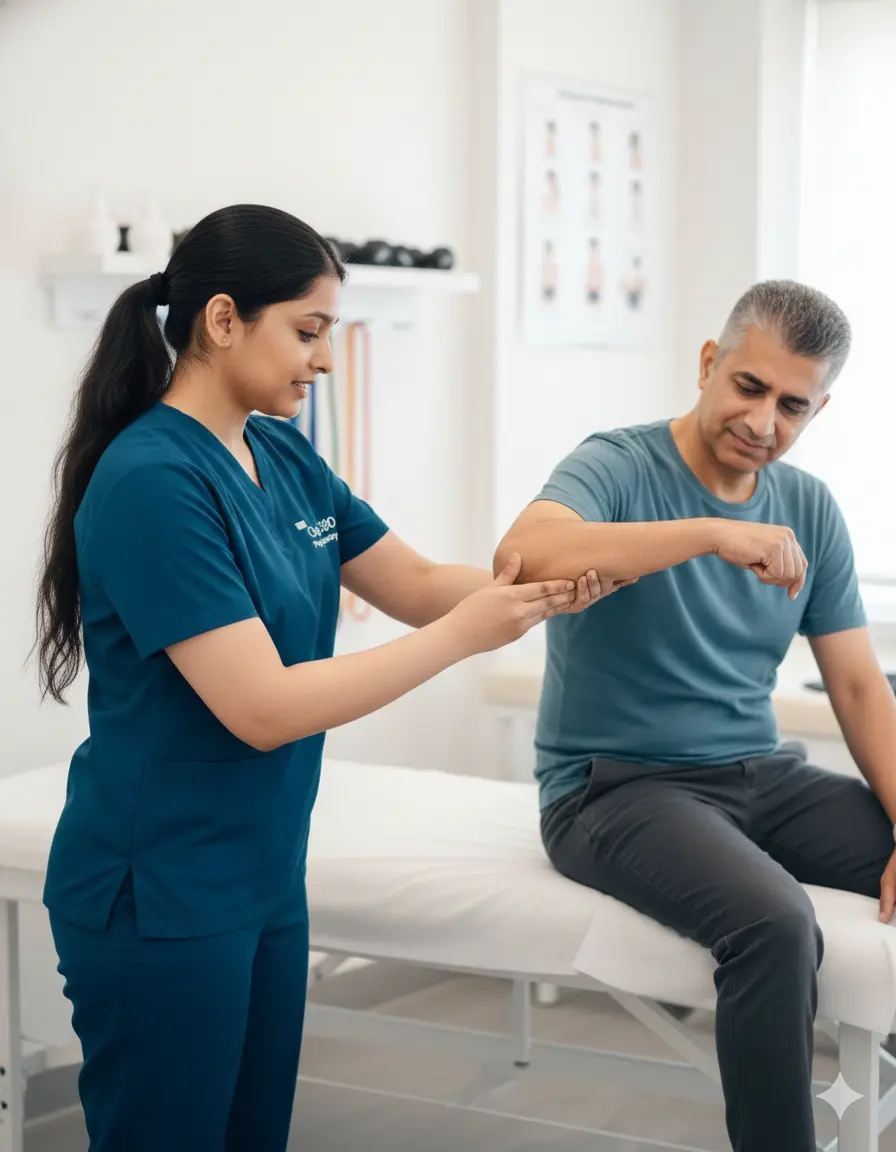
At Curis 360 a first visit is a 45-minute assessment. We look at the elbow, forearm, wrist, neck and shoulder — neck and shoulder problems can refer pain to the outer elbow, and a weak shoulder blade often makes the forearm work harder than it should.
1. Settle the flare without shutting everything down
- Ease the grips that bite hardest for one to two weeks (heavy bags, wringing, screwdriver work)
- Keep gentle daily use so the arm does not stiffen
- A counterforce strap below the elbow helps some people during unavoidable gripping; it supports the day, it does not replace the exercise plan
- Heat or ice can make the day more comfortable; neither replaces exercise
2. Hands-on care when pain is high
Soft-tissue work to the forearm extensors, gentle joint mobilisation of the elbow and wrist, and sometimes IASTM (instrument-assisted soft-tissue work) can reduce guarding so you can start loading. Therapeutic ultrasound or laser therapy may ease pain short-term at all three clinics. These are add-ons beside exercise, not the whole plan.
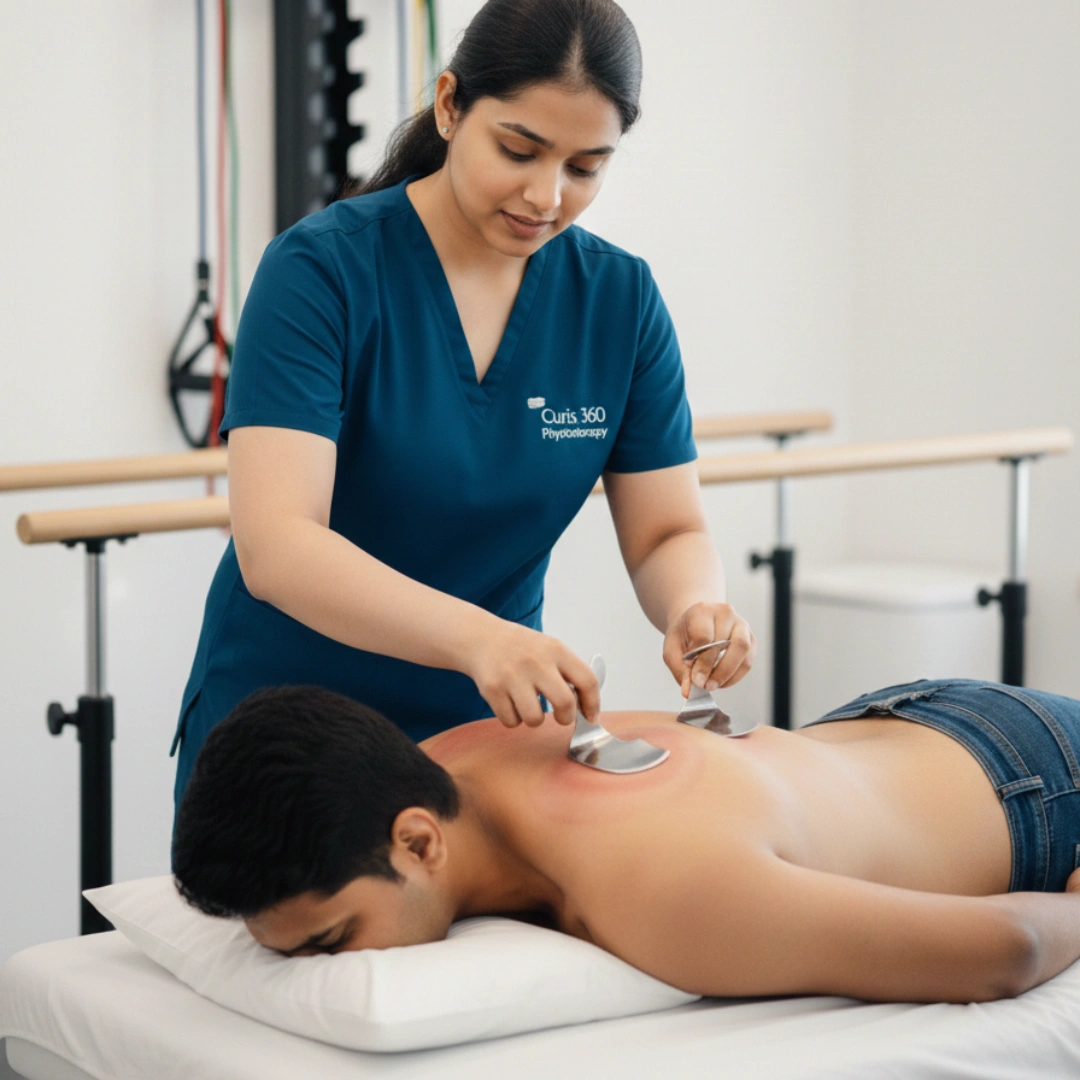
3. Progressive tendon loading (the core)
Research on lateral elbow tendinopathy consistently points to exercise as the main active treatment. We typically progress through:
- Isometrics — holding a light grip or wrist position without moving, to settle pain
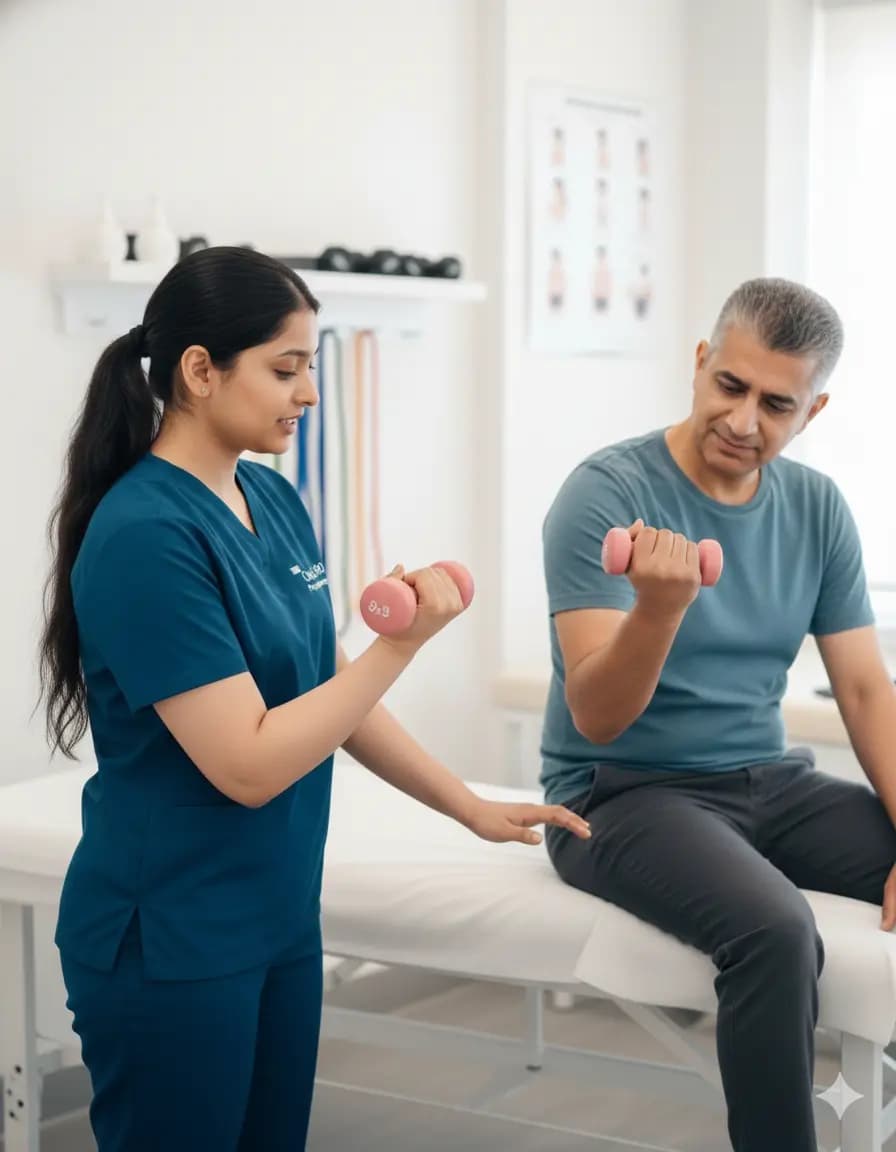
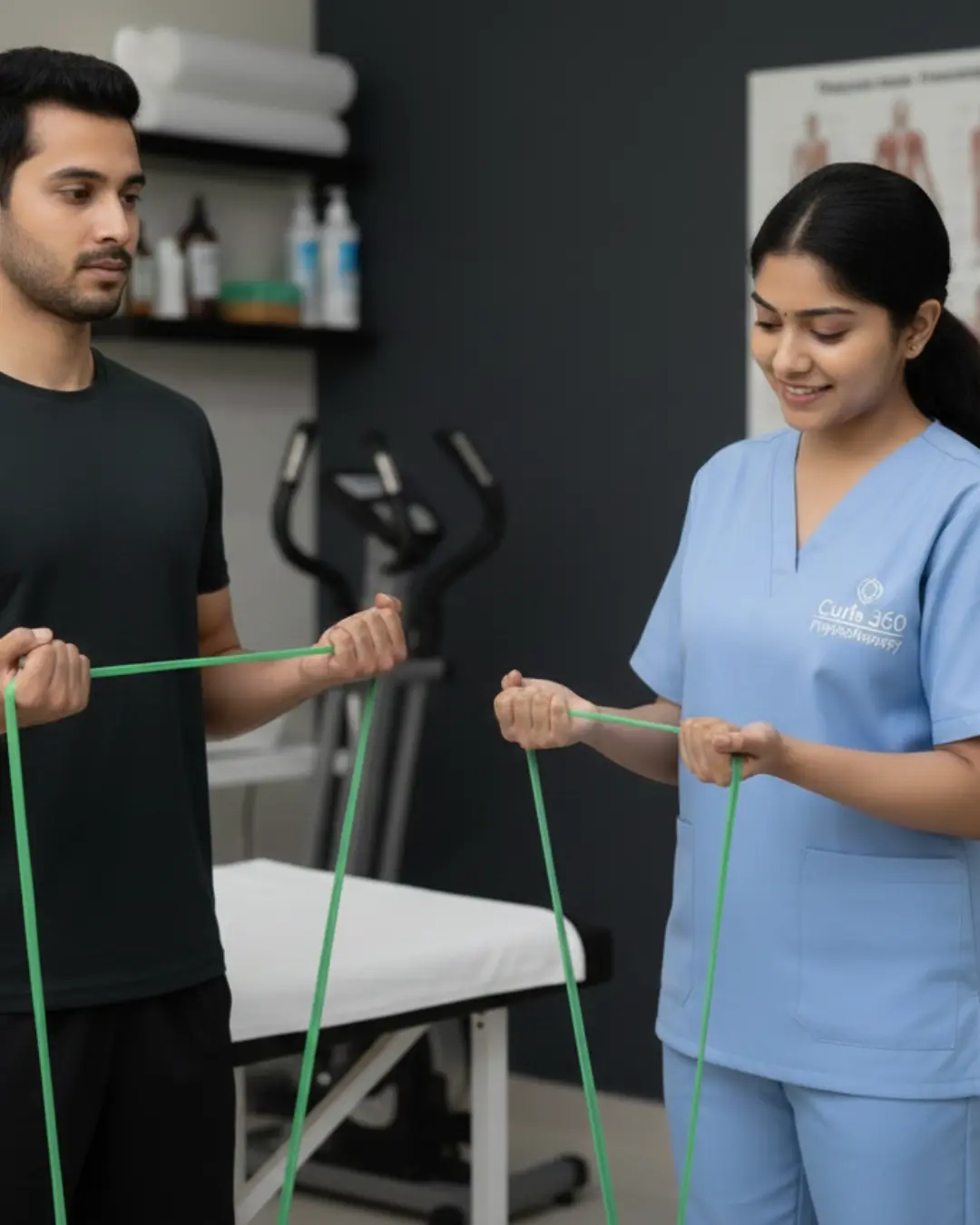
- Eccentric and slow concentric work — lowering and lifting with a light dumbbell or resistance band
- Functional grips — screwdriver patterns, bag carries, racket or mouse drills matched to your life
- Strength and endurance — so the tendon tolerates a normal week again
A common starter is the Tyler twist (twisting a flexible bar) or slow wrist-extension lowers with a light weight, but the exact dose depends on your irritability. Doing random YouTube exercises at high volume is a frequent reason people flare and give up.
4. Desk, gym and sport adjustments
- Mouse: light grip, forearm supported, consider a vertical mouse if gripping a flat mouse bites
- Keyboard: wrists neutral, not cocked up
- Bags: use a backpack or switch hands; avoid hanging a heavy bag on the sore side
- Gym: temporary pause on heavy pull-ups, rows with a crushing grip, and high-rep hammer work until the tendon calms
- Racket sports: check grip size, string tension and technique with your coach once pain allows
Exercises we commonly prescribe
Get assessed first. These are examples, not a personal prescription. Stop if pain shoots down the arm or lasts more than a day at a higher level than your usual ache.
Isometric wrist hold
Sit with the forearm supported, wrist free. Make a gentle fist and hold a pain-tolerable grip for 30–45 seconds. Repeat 4–5 times, twice a day, during a flare.
Slow wrist extension with a light weight
Forearm palm-down on a table, hand over the edge, 0.5–1 kg dumbbell (or a filled water bottle). Lift the hand up slowly, lower over 3 seconds. Start with 2 sets of 8–10. Build toward 3 sets as symptoms allow.
Finger extension with a rubber band
Loop a band around the fingers and open against it slowly. This balances the crushing grip many desk workers hold all day.
Shoulder blade setting
Sit tall, gently draw the shoulder blades down and together without shrugging. Hold 5 seconds. Weak scapular muscles often overload the forearm; we rebuild both.
When to see a doctor first
Seek medical care promptly if you have a hot, red, swollen elbow with fever; cannot use the arm after a fall or direct blow; notice progressive weakness or numbness in the hand; or have night pain that never eases. Those patterns are not typical tennis elbow.
How long recovery takes
| Phase | Rough timing | Focus |
|---|---|---|
| Settle irritability | 1–3 weeks | Ease spikes of load, isometrics, hands-on care if needed |
| Rebuild capacity | 4–8 weeks | Progressive loading, desk and gym changes |
| Return to full demand | 8–12+ weeks | Heavier grips, sport drills, prevention habits |
Tendons remodel slowly. Missing a few days is fine; abandoning the programme for a month usually restarts the clock.
Can online physiotherapy help?
Yes. Online physiotherapy with Dr. Ponkhi Sharma (PT) suits people who mainly need a clear loading plan and form coaching by video. If you need hands-on treatment, ultrasound, laser or taping, book at a clinic near you. Clinic sessions are ₹650/session on packages; ₹790 single session. Online plans start from ₹900.
Frequently asked questions
What is tennis elbow? Tennis elbow (lateral elbow tendinopathy) is overload of the common extensor tendon where it attaches on the outer bony point of the elbow. It causes pain when gripping, lifting or typing, and most people who get it do not play tennis.
How long does tennis elbow take to settle with physiotherapy? Many people notice less pain within three to six weeks of a graded loading programme, and fuller recovery often takes eight to twelve weeks. Tendons remodel slowly, so stopping all exercise is usually less helpful than the right amount of load.
Should I rest a tennis elbow completely? Complete rest alone rarely settles it for long. Short-term easing of aggravating grips helps, but progressive tendon loading under a physiotherapist's plan is what usually rebuilds capacity.
What is the difference between tennis elbow and golfer's elbow? Tennis elbow hurts on the outer elbow and is worse with gripping and wrist-up movements. Golfer's elbow hurts on the inner elbow and is worse with wrist-down or gripping with a bent wrist. Both respond to similar principles of load management and progressive exercise.
Do I need a scan for tennis elbow? Usually not. The history and a clinical examination are enough for most cases. Imaging is considered when progress stalls, the story is atypical, or your doctor wants to rule out another cause.
Can online physiotherapy help tennis elbow? Yes, for assessment of how you grip and move, and for a progressive home exercise plan. Hands-on treatment and clinic machines are available at our Bengaluru clinics when you need them.
Book tennis elbow physiotherapy at Curis 360
For a clinic appointment at Jayanagar, Banashankari or Vasanthapura, call +91 78998 44360, Monday to Saturday, or use the booking page. No doctor's referral is needed.
More on our tennis elbow physiotherapy service, or ask Aria on this website if you are unsure whether your pain sounds like tennis elbow.
Get advice for your own body
Before you follow any plan or exercise, book a 1:1 online consultation with Dr. Ponkhi Sharma (PT). She reviews your problem and any reports you share, and sets out the next steps that fit you, not everyone.
Get our new guides by email

Dr. Ponkhi Sharma (PT)
Founder of Curis 360. Specializing in advanced rehabilitation, evidence-based manual therapy, and holistic patient care in Bengaluru.
View Full Clinical Profile